16 September — 16 January 2027
Rituals of Time
Group exhibition

Rituals of Time brings together the works of nine African artists who explore notions of epoch and duration, alongside memory, nostalgia, and longing. It unfolds around the central idea that time is not linear but moves in spirals and returns, following a rhythm of birth, death and renewal that reverberates through bodies and spirits. In the exhibition, the artworks emerge as a fluid, generative force, reimagining and reinterpreting the world beyond temporal constraints. Epochs fold into cycles that unfold according to their own durations, challenging the Western conception of time as continuous progression and memory as linear preservation.
The exhibition echoes the Mbari tradition of the Owerri-Igbo communities of southeastern Nigeria, a communal artistic practice rooted in ancestral ritual that serves to remember the past, recreate reality and imagine a better future. As Nigerian novelist and poet Chinua Achebe observed, the House of Mbari embodies an aesthetic of process rather than result, ensuring that each generation receives its own impulse and movement of creation. In the Load Gallery, where images flicker into being and vanish, this same impermanence is refracted through the screen, transforming it into a threshold between what has been, what is, and what may become. Ancestral heritages and knowledge are witnessed and released, while spiritual forces manifest in forms that capture their attributes, whether carved in moving images or rendered in pixels.
This notion of time and memory resonates with Kenyan philosopher John S. Mbiti's reflections. For Mbiti time is a compilation of events unfolding through two durations: the recent past alongside the present, and the remote past. Memory is the thread that binds these dimensions, keeping the "living-dead" present for generations before they fade into collective memory. In Michael Aboya’s Echoes of Time, images become portals where time folds back upon itself, thus exploring the emotional and spiritual intersections of humanity, nature, and time. Similarly, in At the Seams, Spilling Alexis Chivir-ter Tsegba's collage practice assembles and recomposes fragments, allowing past, present and speculative futures to coexist.
The memory that surfaces throughout this exhibition does not pretend to recover what has been lost, dismissed or cancelled; rather, it allows a return to the past to activate what may still become. In Àsìkò's What Was Lost Between Worlds, memory is evoked in order to transform. This is staged through the tradition of Egúngún among the Yoruba people of West Africa, an ancestral masquerade that connects the living to the ancestral realm. Here, Egúngún becomes a living archive that dissolves into symbols as a colonial spectrum appears, asking whether embodied knowledge vanishes or transforms into another mode of existence.
This artistic expression of Yoruba cosmogony finds its material counterpart in Ancestral Frequency, a sculptural costume created by Melissa Simon-Hartman in dialogue with Àsìkò's work. Made from hand-woven fibres, reclaimed textiles, shells and beads, the work draws on the visual language of Egúngún while reinterpreting it through contemporary collaboration. As a physical presence, Ancestral Frequency is a garment for a body that bridges epochs, a wearable archive of longing, and a testament to the enduring duration of the ancestral within the span of a single life.
Notions of nostalgia and longing are central to this exhibition. As reflected in Nana Frimpong Oduro's work, these elements, shaped by time, are understood not as passive states of looking backward, but as active forces that pull the past into the present and reach toward the future. Through a dense constellation of figures, his introspection opens a dialogue between different forces of nature. Here, water, earth, fire and air are explored as agents for bodily experience and ritual transformation, and for the artist's inner consciousness as a vessel for a higher power. Delphine Diallo, in her Motherverse project, imagines a submerged realm of memory where ancient knowledge and future technology converge, while Abdulrahman Adesola Yusuf redraws symbols from the public domain as though "playing Tetris" to trace the spiritual weight of personal moments and economic pressures.
As embodied in the Mbari tradition of creative renewal, the body emerges in Rituals of Time as a central site where time, memory and longing converge. In John Baloy's photographs, the body carries history, resilience and continuity, becoming a site of transmission across time. Osinachi approaches embodiment through a distinctly digital language, pushing the boundaries of Microsoft Word's vector tools to construct domestic interiors and Afrofuturist visions where pixelated digital fills represent Black skin and turn everyday patterns into explorations of vulnerability.
Rituals of Time offers an alternative understanding of digital art, not as a site where time and memory are preserved, but as a space where the past changes shape constantly in order to re-enter the present. It is a material in continuous transformation; the future, in turn, stands as a form of memory still possible. In this collective exhibition, the rituals of time do not lead towards a past to which we might return, nor towards a future from which we might escape. For art becomes a place of transit, where what we were, what we are, and what we may yet become enter into a single duration and epoch. Nostalgia ceases to be a "looking back" and transforms into a "reaching forward", while longing is not a lament for what is lost but an engine for what may be born.
Written by Saiba Bayo
Rituals of Time brings together the works of eight African artists who explore notions of epoch and duration, alongside memory, nostalgia, and longing. It unfolds around the central idea that time is not linear but moves in spirals and returns, following a rhythm of birth, death and renewal that reverberates through bodies and spirits. In the exhibition, the artworks emerge as a fluid, generative force, reimagining and reinterpreting the world beyond temporal constraints. Epochs fold into cycles that unfold according to their own durations, challenging the Western conception of time as continuous progression and memory as linear preservation.
The exhibition echoes the Mbari tradition of the Owerri-Igbo communities of southeastern Nigeria, a communal artistic practice rooted in ancestral ritual that serves to remember the past, recreate reality and imagine a better future. As Nigerian novelist and poet Chinua Achebe observed, the House of Mbari embodies an aesthetic of process rather than result, ensuring that each generation receives its own impulse and movement of creation. In the Load Gallery, where images flicker into being and vanish, this same impermanence is refracted through the screen, transforming it into a threshold between what has been, what is, and what may become. Ancestral heritages and knowledge are witnessed and released, while spiritual forces manifest in forms that capture their attributes, whether carved in moving images or rendered in pixels.
This notion of time and memory resonates with Kenyan philosopher John S. Mbiti's reflections. For Mbiti time is a compilation of events unfolding through two durations: the recent past alongside the present, and the remote past. Memory is the thread that binds these dimensions, keeping the "living-dead" present for generations before they fade into collective memory. In Michael Aboya’s Echoes of Time, images become portals where time folds back upon itself, thus exploring the emotional and spiritual intersections of humanity, nature, and time. Similarly, in At the Seams, Spilling Alexis Chivir-ter Tsegba's collage practice assembles and recomposes fragments, allowing past, present and speculative futures to coexist.
The memory that surfaces throughout this exhibition does not pretend to recover what has been lost, dismissed or cancelled; rather, it allows a return to the past to activate what may still become. In Àsìkò's What Was Lost Between Worlds, memory is evoked in order to transform. This is staged through the tradition of Egúngún among the Yoruba people of West Africa, an ancestral masquerade that connects the living to the ancestral realm. Here, Egúngún becomes a living archive that dissolves into symbols as a colonial spectrum appears, asking whether embodied knowledge vanishes or transforms into another mode of existence.
This artistic expression of Yoruba cosmogony finds its material counterpart in Ancestral Frequency, a sculptural costume created by Melissa Simon-Hartman in dialogue with Àsìkò's work. Made from hand-woven fibres, reclaimed textiles, shells, beads and integrated lighting elements, the work draws on the visual language of Egúngún while reinterpreting it through contemporary collaboration. As a physical presence, Ancestral Frequency is a garment for a body that bridges epochs, a wearable archive of longing, and a testament to the enduring duration of the ancestral within the span of a single life.
Notions of nostalgia and longing are central to this exhibition. As reflected in Nana Frimpong Oduro's work, these elements, shaped by time, are understood not as passive states of looking backward, but as active forces that pull the past into the present and reach toward the future. Through a dense constellation of figures, his introspection opens a dialogue between different forces of nature. Here, water, earth, fire and air are explored as agents for bodily experience and ritual transformation, and for the artist's inner consciousness as a vessel for a higher power. Delphine Diallo, in her Motherverse project, imagines a submerged realm of memory where ancient knowledge and future technology converge, while Abdulrahman Adesola Yusuf redraws symbols from the public domain as though "playing Tetris" to trace the spiritual weight of personal moments and economic pressures.
As embodied in the Mbari tradition of creative renewal, the body emerges in Rituals of Time as a central site where time, memory and longing converge. In John Baloy's photographs, the body carries history, resilience and continuity, becoming a site of transmission across time. Osinachi approaches embodiment through a distinctly digital language, pushing the boundaries of Microsoft Word's vector tools to construct domestic interiors and Afrofuturist visions where pixelated digital fills represent Black skin and turn everyday patterns into explorations of vulnerability.
Rituals of Time offers an alternative understanding of digital art, not as a site where time and memory are preserved, but as a space where the past changes shape constantly in order to re-enter the present. It is a material in continuous transformation; the future, in turn, stands as a form of memory still possible. In this collective exhibition, the rituals of time do not lead towards a past to which we might return, nor towards a future from which we might escape. For art becomes a place of transit, where what we were, what we are, and what we may yet become enter into a single duration and epoch. Nostalgia ceases to be a "looking back" and transforms into a "reaching forward", while longing is not a lament for what is lost but an engine for what may be born.
Written by Saiba Bayo
Explore each artist’s concept
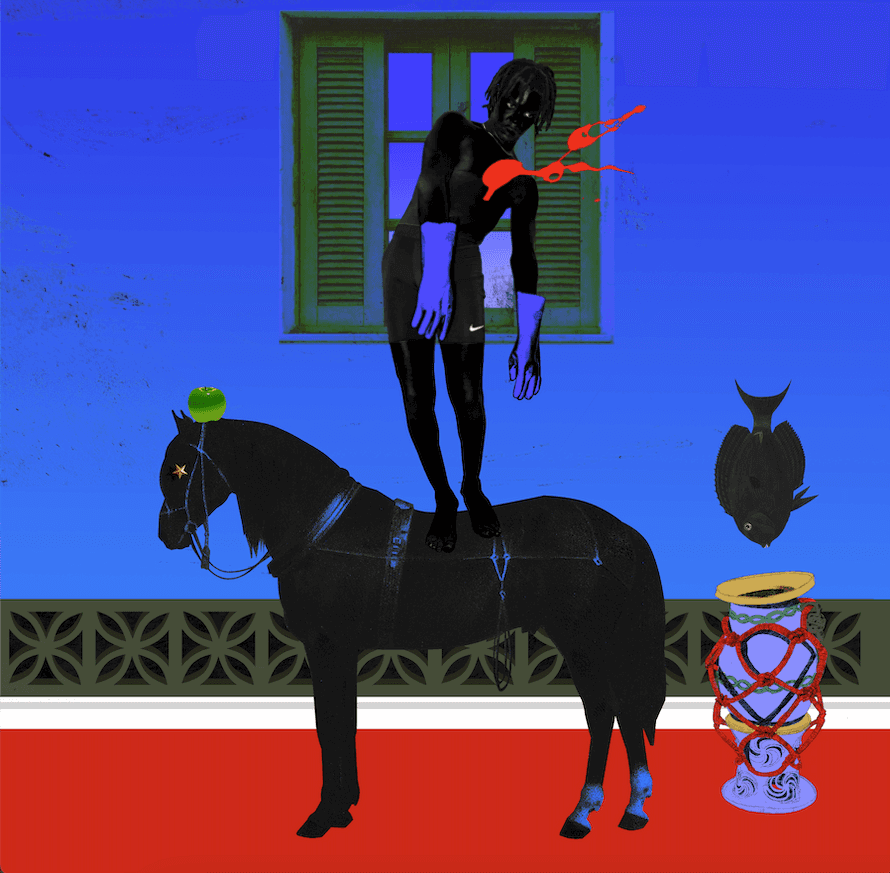
Abdulrahman Adesola Yusuf

Alexis Chivir-ter Tsegba

Osinachi

Nana Frimpong Oduro

Delphine Diallo

John Baloy

Àsìkò

Michael Aboya

Melissa Simon-Hartman
Noticias y Prensa


Rituals of Time: Nine African Artists Unmake the Western Clock at Load Gallery
Rituals of Time: Nine African Artists Unmake the Western Clock at Load Gallery
(RED-EYE)
(RED-EYE)
Load Gallery Presents ‘Rituals of Time’, a Group Exhibition
(Africa Art News)
(Africa Art News)
Rituals of Time
niceaunties: Ageing never felt more exciting
(The AI Art Magazine)
(The AI Art Magazine)
Load Gallery brings together nine African artists in ‘Rituals of Time’
(Prazzle)
(Prazzle)
opening hours
thursday, friday and saturday
4pm—8pm
CONTACT
Uliana Triapichkina, Project Manager
uliana@load-gallery.com
Isabel Palomar, Gallery Manager
isabel@load-gallery.com
opening hours
thursday, friday and saturday
4pm—8pm
CONTACT
Uliana Triapichkina, Project Manager
uliana@load-gallery.com
Isabel Palomar, Gallery Manager
isabel@load-gallery.com
opening hours
thursday, friday and saturday
4pm—8pm
CONTACT
Uliana Triapichkina, Project Manager
uliana@load-gallery.com
Isabel Palomar, Gallery Manager
isabel@load-gallery.com
opening hours
thursday, friday and saturday
4pm—8pm
CONTACT
Uliana Triapichkina, Project Manager
uliana@load-gallery.com
Isabel Palomar, Gallery Manager
isabel@load-gallery.com
opening hours
thursday, friday and saturday
4pm—8pm
CONTACT
Uliana Triapichkina, Project Manager
uliana@load-gallery.com
Isabel Palomar, Gallery Manager
isabel@load-gallery.com