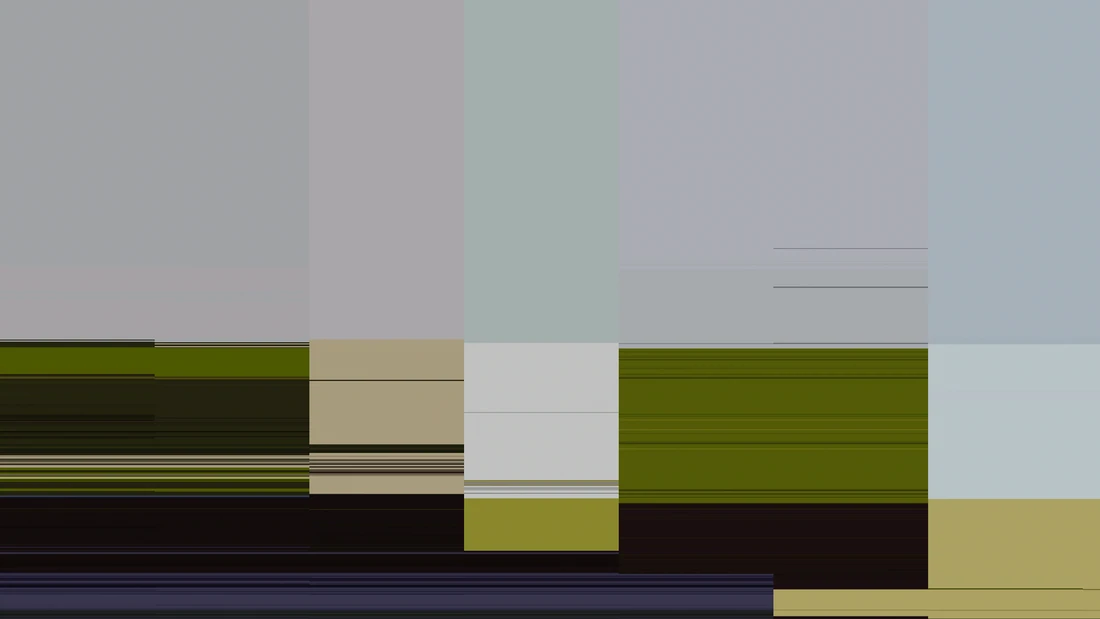
In his artistic practice, Quayola speculates on new forms of landscape painting, reflecting on how technology is rapidly transforming the way we observe and perceive the world around us. As our collective vision becomes increasingly mediated by digital processes that enhance, filter, and distort reality, the boundaries between the real and the artificial, the physical and the digital, continue to blur.
As a response to this evolving condition, Quayola draws a parallel with late 19th-century landscape painters who sought new visual languages to explore and depict nature. Similarly, he conducts systematic observations of natural landscapes and phenomena—yet his approach is mediated by advanced technological apparatuses and computational strategies that augment human perception and capabilities.
Natural landscapes become the subject of algorithmic dissection, where botanical forms are deconstructed into minimal units: shifting palettes and moving pixels. Though inclined toward abstraction, this process of visual synthesis remains deeply connected to the pictorial heritage. On the surface of the screen—treated as a digital canvas—clusters of matter and pixelated brushstrokes emerge, revealing their digital materiality and a new kind of algorithmic gesturality.
Within Quayola’s practice lies a sensation of sublime estrangement: the works feel both familiar—deeply rooted in a long-standing pictorial tradition—and alien, as they are produced through tools and methods foreign to classical painting.
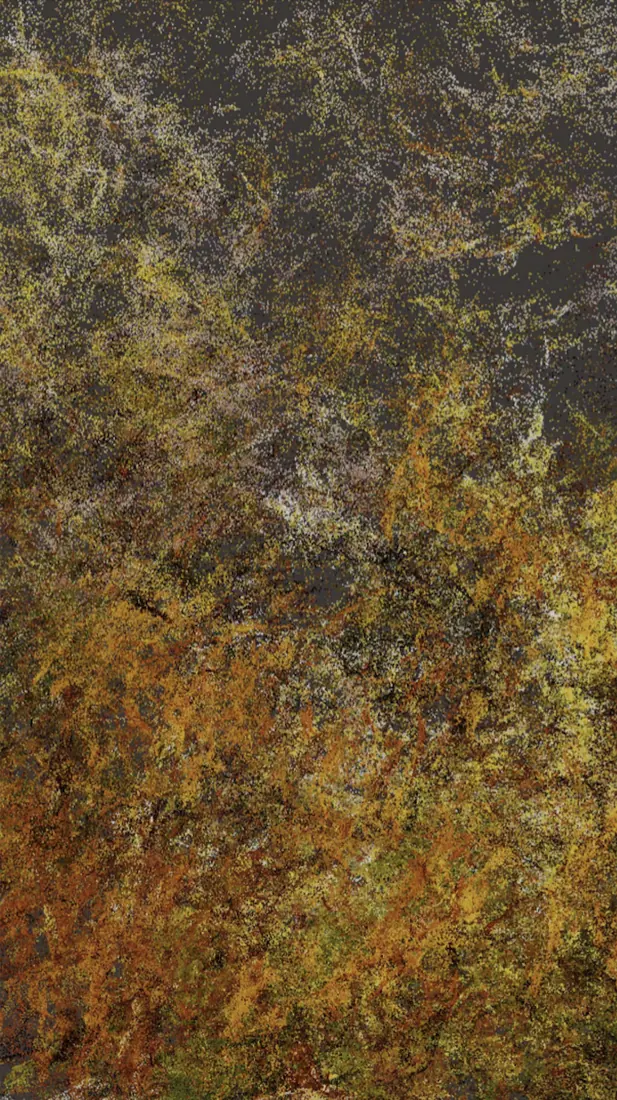
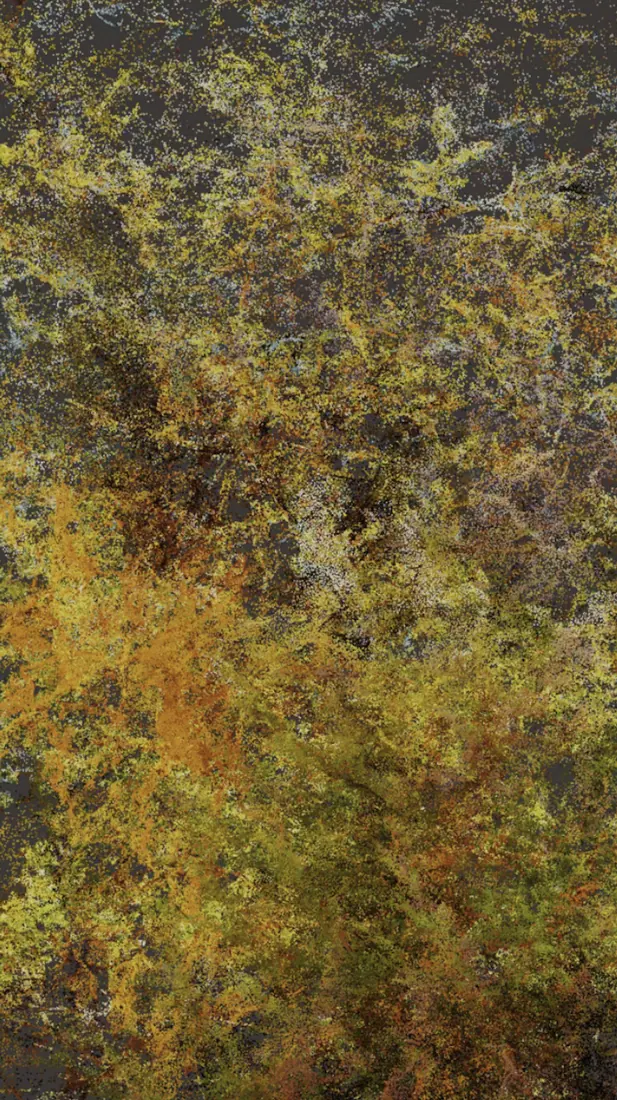
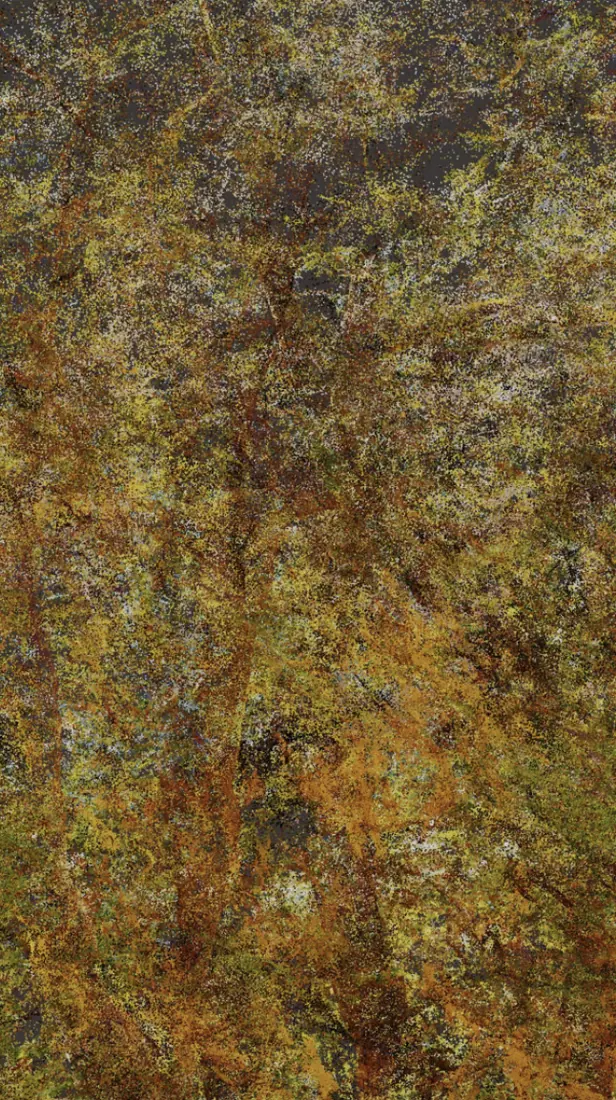
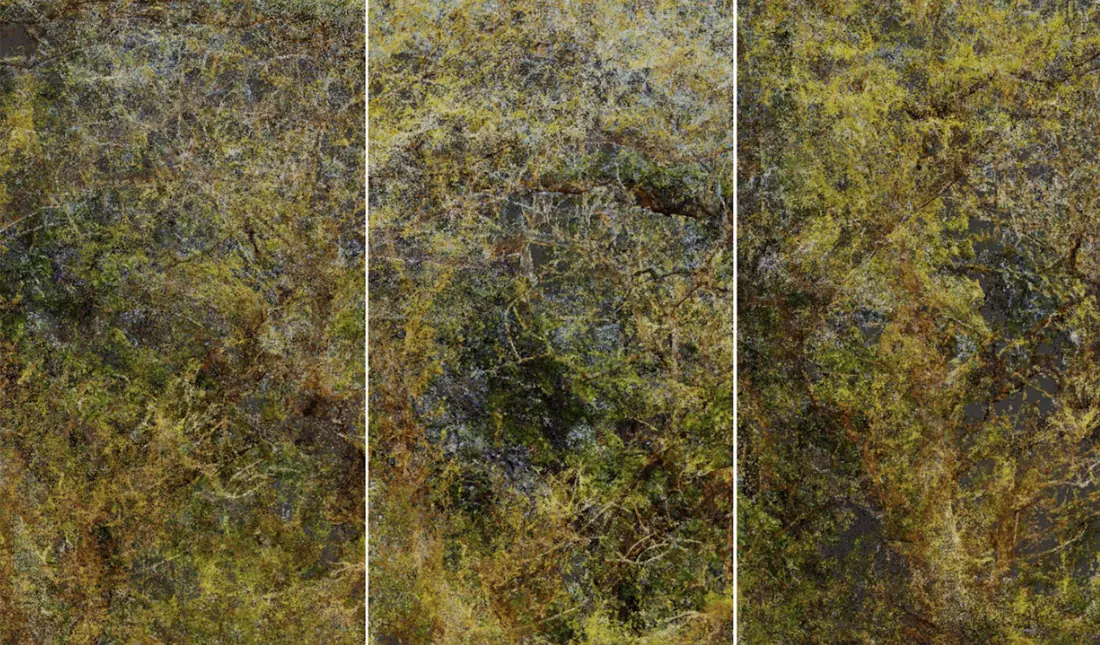
The exhibition Dissected Palette features two core series that articulate Quayola’s research: Pleasant Places and Pointillisme. Both were developed through a series of field data recordings in the Provençal countryside—landscapes that inspired generations of artists throughout the 19th century.
Pleasant Places is an homage to the pictorial tradition of landscape, composed of a series of digital paintings that explore the threshold between representation and abstraction.
Pointillisme, by contrast, is a celebration of the machine’s inherent inability to fully capture the complexity of natural data. Using high-precision laser scanning, Quayola attempts to translate the arboreal forms of the Provençal forests—but instead creates an ode to error, where gaps, distortions, and ruptures become expressive material.
As curator Lucia Longhi writes, “Today, landscape is no longer what we observe only with our eyes: it is an image arising from the merging of human and non-human gaze. The artist plunges into nature in pursuit of that image: a vision mediated by technology.”
In his paintings, Quayola continues to blur and dissolve the visual fidelity of the landscape. As the image disintegrates before our eyes, it raises fundamental questions about our technologically mediated relationship with reality itself.
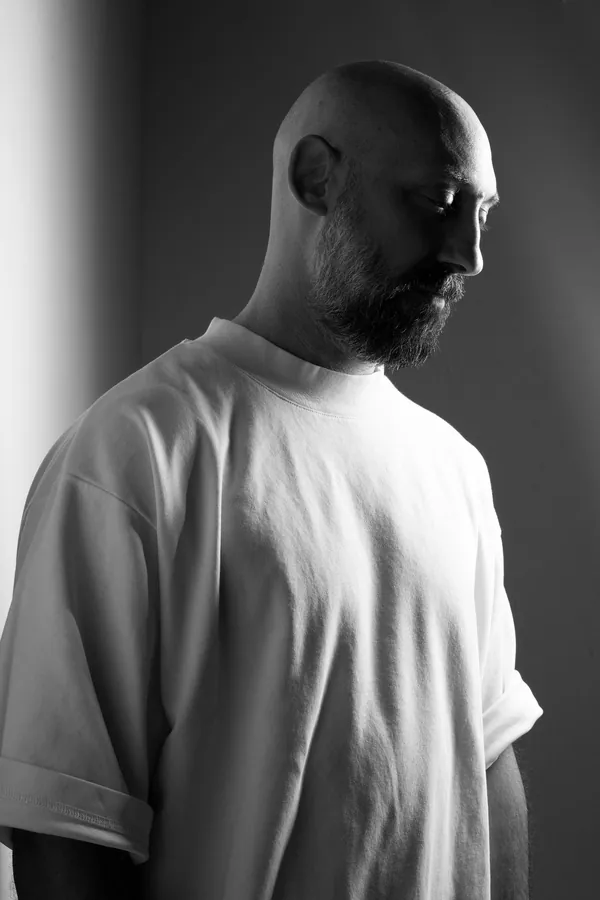
Quayola
Rome
“Ultimately, I am interested in creating computational systems to translate specific natural behaviours and phenomena into new forms of pictorial representation.”
Quayola is an Italian artist who employs technology as a lens to explore the tensions and equilibriums between seemingly opposing forces: the real and artificial, figurative and abstract, old and new. Constructing immersive installations, he engages with and re-imagines canonical imagery through contemporary technology.
Quayola’s hybrid works draw on classical aesthetics like landscape painting, sculpture, and iconography. His varied practice, deriving from custom computer software, also includes audiovisual performance, immersive video installations, sculpture, and works on paper.
His work, Pointillisme, is created using LiDAR, a 3D laser scanning system that captures nature in high detail. As the machine scans the forest, it makes occasional errors, creating a landscape that is both imperfect and unique. After the scans are transformed through custom software.
Quayola became the third artist to make a mapping on the iconic Casa Batlló in Barcelona, after Refik Anadol and Sofia Crespo. His project, Arborescent, was inspired by natural growth systems and environmental responses.
Also a frequent collaborator on musical projects, Quayola has worked with composers, orchestras and musicians including London Contemporary Orchestra, National Orchestra of Bordeaux, Ensemble Intercontemporain, Vanessa Wagner, Jamie XX, Mira Calix, Plaid and Tale Of Us.
Selected group shows
- Vox Marmoris, mudaC and Cave Successori Alfonso Corsi, Carrara, Italy, 2024
- Serpenti Infinite Tales, Genesis Gallery, Beijing, China, 2024
- Dal Cuore alle Mani: Dolce&Gabbana, Palazzo Reale, Milan, Italy, 2024
- Les héritiers de l’impressionnisme, Festival Normandie Impressionniste, Ville du temps retrouvé, Cabourg, France, 2024
- Evi Lichtungen Internationale Licht Kunstbiennale, Hildesheim, Germany, 2024
- Sapporo International Art Festival, Sapporo, Japan, 2024
- UCCA exhibition for Hangzhou Center, Hangzhou, China, 2023–2024
- Noor Riyadh Festival, Riyadh, Saudi Arabia, 2023
- Quayola x LG OLED ART, Frieze London, The Regent’s Park, London, UK, 2023
- Catalyst Lab - The Making of Tomorrow, Ars Electronica Exhibition, Munich, Germany, 2023–2024
- Paesaggio: Quayola / Roberto Pugliese, Quadriennale di Roma, Museo di Roma Palazzo Braschi, Rome, Italy, 2023
- Imaginarium - Acqua Foundation & LVRSustainable, Fondazione Riccardo Catella, Milan, Italy, 2023
- Return to Nature, Pearl Art Museum, Shanghai, China, 2023
- Digital Impact, Disseny Hub Museum, Barcelona, Spain, 2023
- Is this real? L’arte nell’epoca della Game Engine Culture, Fondazione Modena Arti Visive - FMAV, Palazzina dei Giardini, Modena, Italy, 2023
- Jeju Biennale, JMOA, Jeju Museum of Art, Jeju, Korea, 2022–2023
- Slip.Stream.Slip, SODA Gallery, Manchester, UK, 2022
- Ars Electronica - Esch Museum Exhibition, Luxembourg, 2022
- White Carrara, Piazza Alberica, Carrara, Italy, 2022
- The Magic Forest, Palais des Beaux-Arts, Lille, France, 2022
- Il video rende felici, Palazzo delle Esposizioni, Rome, Italy, 2022
- Tongyeong Triennale, Tongyeong, South Korea, 2022
Selected solo shows
- LUCE, Commission for Istituto Luce Archive, Teatro 18, Cinecittà, Rome, Italy, 2024
- Storms, Artnet & Times Square Arts, New York, USA, 2024
- Plutone / Proserpina, Quayola, mudaC, Museo delle arti, Carrara, Italy, 2023–2024
- Ways of Seeing, CUBO Unipol, Bologna, Italy, 2023
- Aorist and Faena Art x Miami Art Week, Faena Project Room, Miami, USA, 2022–2023
- En plein air, NOME Gallery, Berlin, Germany, 2022
- Pointillisme, Vasarely Foundation - Residency Artist Prize, Aix-en-Provence, France, 2022–2023
- Forze / Vettori / Cromie. Tempeste digitali e moti in espansione, Marignana Arte Gallery, Venice, Italy, 2022
- Transient - Impermanent Paintings, Artechouse DC, Washington DC, USA, 2022
- Storms, Bitforms Gallery, New York, USA, 2021–2022
- Pointillisme, Galerie Charlot, Paris, France, 2021–2022
- QUAYOLA re-coding, Palazzo Cipolla - Fondazione Terzo Pilastro, Rome, Italy, 2021–2022
- Ultima perfezione, Galleria Civica di Modena - FMAV, Modena, Italy, 2020–2021
Awards
- Vasarely Foundation Residency Prize, 2021
- Premio Quadriennale, Honorary Mention, 2016
- New Technological Art Award, 2014
- Prix Ars Electronica, Honorary Mention in Interactive Arts, 2014
- Prix Ars Electronica, Golden Nica in Animation, 2013
- Japan Media Art Festival, New Face Award, 2013
- Cool Silicon Award, 2013
- Italian Cultural Institutes for the 54th Venice Biennale, Best Video, 2011
- Rencontres Audiovisuelles, Best Original Music for Strata #2, 2009
- Videomedeja, Best Installation for Natures, 2009
Selected press
- Quayola to Transform Gaudí’s Casa Batlló Facade with Arborescent Digital Mapping Projection, designboom, 2024
- Quayola x LG OLED Bring Digital Impressionism to Frieze London, Wallpaper Magazine, 2024
- Midnight Moment: Storms, Times Square Chronicles, 2024
- The Evolution of Landscape Painting in the Digital Age, Art Plugged, 2024
- Artist Quayola on Why Algorithmic Art Is Like Impressionism, Artnet, 2024
- Manfred Mohr, Refik Anadol, Quayola, Casey Reas at Art SG, Art Basel, 2024
- Quayola Selected for Texas Commission, “Pioneer Tower Public Art Project”, Patch, 2020
Quayola | Dissected Palette